
Choosing the right engineering partner means considering experience, responsiveness, and collaboration. Involving that team early can also improve planning, funding, and overall project success.
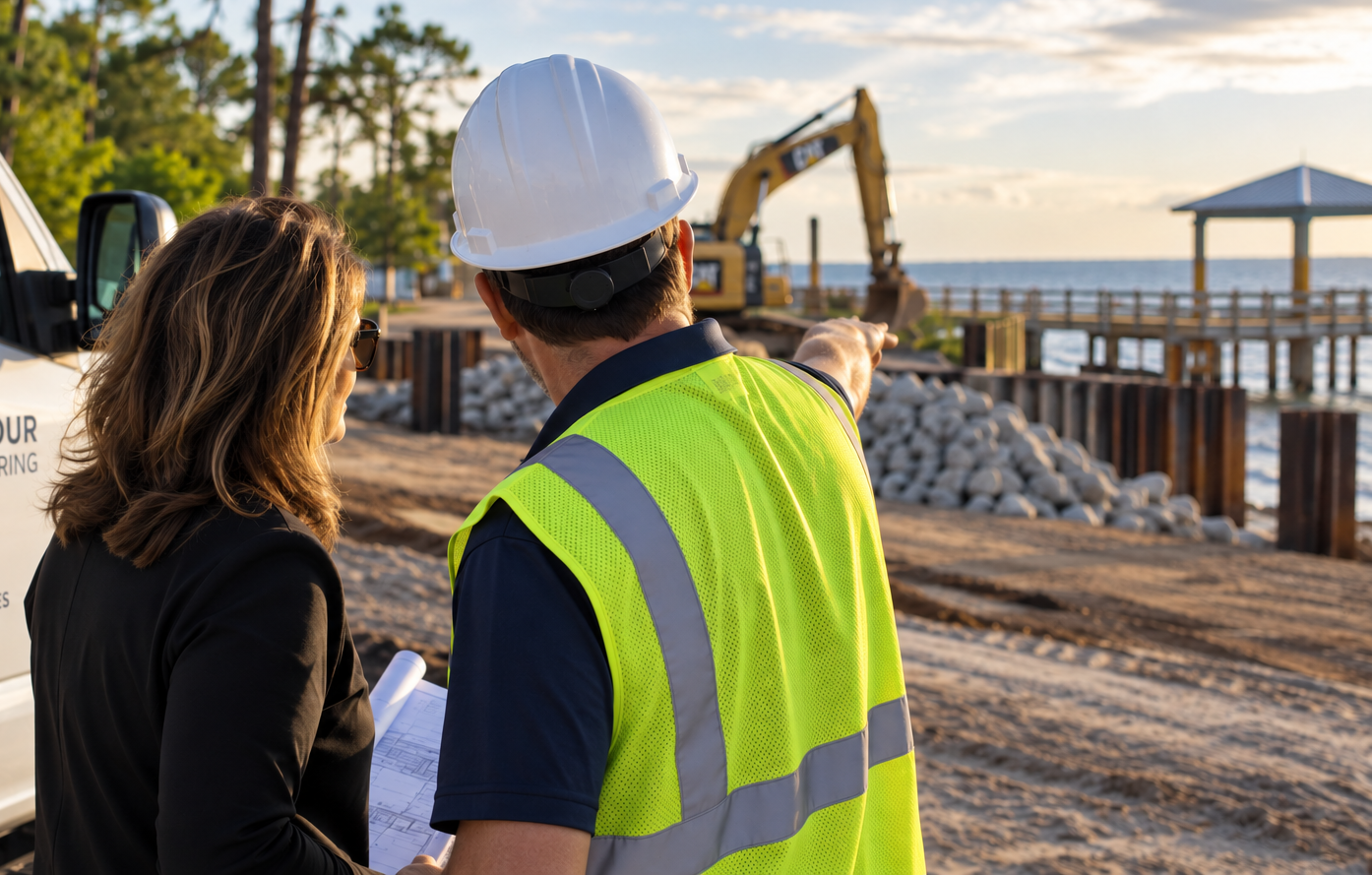
Choosing an engineering partner is an important decision for local governments, utility boards, and developers. The right firm can help navigate permitting and funding requirements, establish realistic project costs and timelines, and identify potential challenges before they become costly problems.
1. Relevant Qualifications and the Right Fit
Technical expertise, proper licensing, and relevant experience should always come first. But the size of an engineering firm alone does not determine whether it is the right fit for your project.
Consider who will actually manage your project, how accessible that team will be, and whether the firm has experience with projects similar to yours. Local governments and other public entities should look for an engineering team that has the necessary technical capabilities while also providing the level of attention and involvement the project requires.
2. Experience with Local Government and Public Projects
Public projects operate under requirements that can be very different from private development. An engineering partner should understand the processes that local governments and other public entities must follow, including:
Experience matters because many of these requirements affect a project long before construction begins. An engineering team familiar with public-sector projects can anticipate regulatory requirements early, reducing the risk of costly revisions and unnecessary delays later.
3. Responsiveness and Accessibility
Infrastructure issues and construction questions do not always happen on a convenient schedule. When a contractor has a question, a problem develops in the field, or an agency requests additional information, timely communication can make the difference between resolving an issue quickly and delaying a project.
Before selecting a firm, ask who will serve as your day-to-day contact and how involved that person will remain throughout the project.
A firm's history with existing clients can also tell you a great deal. Long-term client relationships often reflect consistent communication, dependable service, and the ability to solve problems when they arise.
4. A Collaborative Approach
Engineering does not happen in a vacuum. Public projects can involve elected officials, government staff, utility managers, contractors, funding agencies, regulatory agencies, property owners, and members of the public.
A good engineering partner should be able to work effectively with all of them.
That begins with listening. Rather than approaching every project with a predetermined solution, the engineering team should first understand the client's needs, priorities, budget, and long-term goals. From there, the engineer can help develop a practical path forward.
The biggest mistake project owners make is waiting too long to hire an engineer. Many believe they need to secure full funding or finalize blueprints before reaching out. In reality, early planning is often when engineering input can be most valuable.
Qualifications and experience provide important information, but a few practical questions can help determine whether a firm will be the right partner for your particular project:
The answers can provide insight not only into a firm's technical qualifications, but also into how it approaches relationships, communication, and problem-solving.
At Seymour Engineering, many of our relationships with local governments and public entities begin long before a project reaches construction. We work with communities during the early planning stages to evaluate ideas, understand funding and permitting requirements, establish realistic project scopes, and develop a path forward.
Sometimes a project begins with secured funding and a clearly defined scope. Other times, it begins with a community need and an idea.
In either case, involving the right engineering team early can help turn that idea into a project that is practical, fundable, and ready to move forward.
